
EdgeFinder
Forex, Indices, And Commodities Scanner


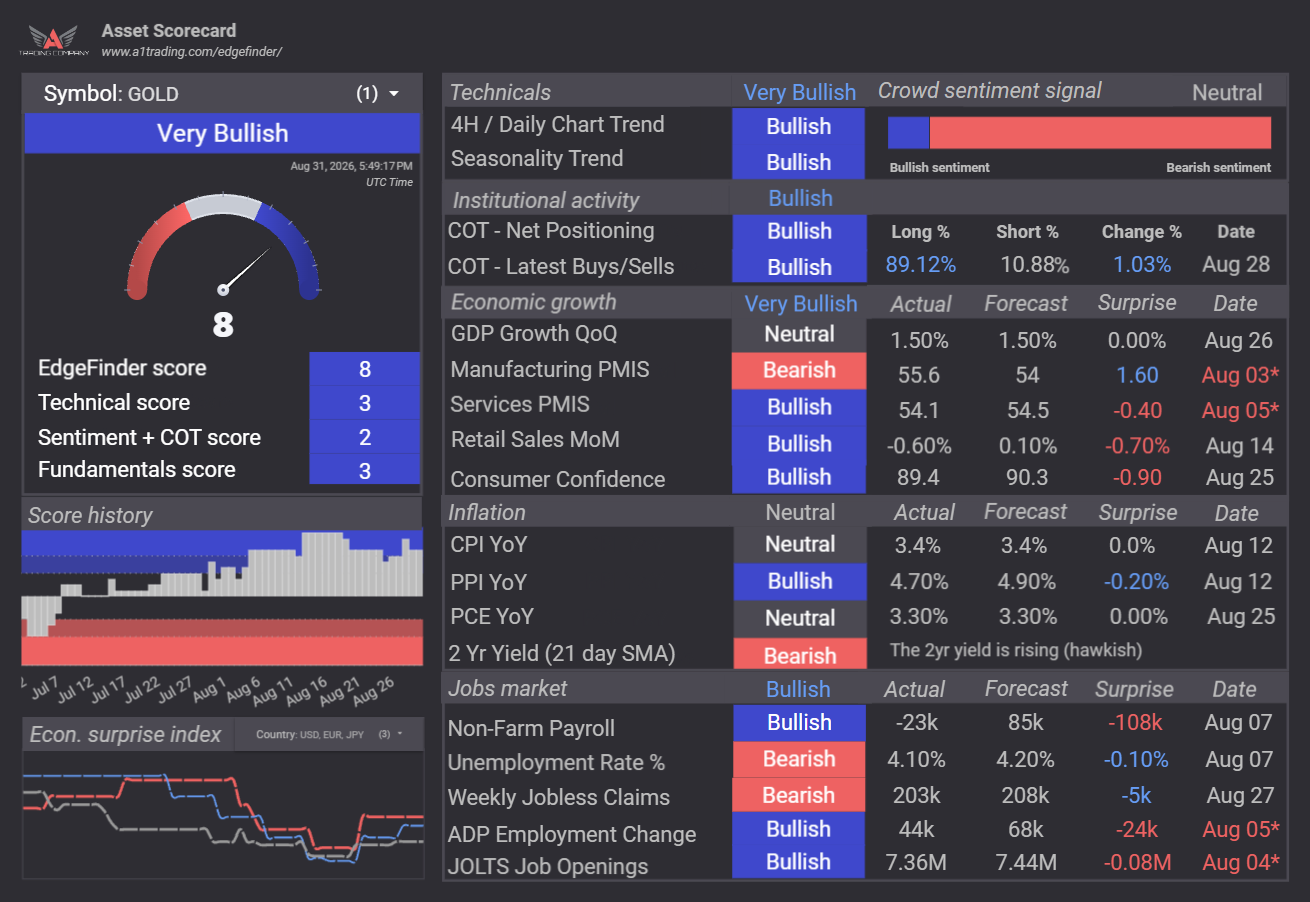
Retail sentiment is helpful to traders as it provides valuable insights into the behavior and sentiment of individual investors, often serving as a contrarian signal that traders can use to gauge potential market reversals or momentum shifts.
Retail sentiment is a measurement of long and short positions in a certain market by the retail crowd. A retail investor is any kind of investor that is not an institution, insider or entity other than an individual.
Oftentimes, retail sentiment is inversely correlated to what big money is doing. If retail positions are majority long a certain asset, this indicates a bearish signal, because it usually means that institutions are majority short. The same concept applies for when retail is majority short; institutions are likely long sending a bullish signal.
In stark contrast to retail traders, "smart money" refers to the capital controlled by large financial institutions, hedge funds, and other market movers. These entities operate with significant resources and advanced analytical tools, enabling them to make more informed and strategic decisions.
Smart money often drives market trends, as these large players take substantial positions in specific directions. A currency pair, for example, may continue to trend despite appearing overbought or oversold, due to ongoing institutional investment.

The dollar surged after payrolls doubled expectations at 165,000 and unemployment fell to 4.1%, lifting December hike odds back to 75%. DXY now eyes the 103 handle.
RSP fell 2.8% in a broad sell-off as every sector turned red, but December hike odds slid from 80% to 69%. On a rebound, the equal weight may lead over tech.
Gold surged 3.5% through its downtrend on a weaker dollar after the midterms, but hot growth, sticky inflation, and December hike risk argue it may fade.


